Safety
Storms, power outages, high water
North Texas gets ice, wind, and water, sometimes in the same week.
Propane keeps working when the power does not — as long as the tank is full before the weather and nobody tries to fix it themselves after.
Fill before the weather, not during it
Check the gauge when a cold snap or a storm is in the forecast, and call us while the roads are still good. Everybody calls at once when the ice arrives, and a bobtail moves slower on a bad road than it does on a good one. A tank that is already full is one less thing to think about.
A full tank is also a heavier tank. In high water, weight is what keeps it where it belongs.
Clear the way
- Clear the driveway and a path to the tank. If the driver cannot reach it, the driver cannot fill it.
- Brush the snow and ice off the tank lid so the gauge can be read. Use a broom, not a shovel.
- Keep vents, flues, and the chimney clear of ice, leaves, and drift. Blocked venting is how carbon monoxide gets into a house.
- Mark the tank with a stake or a flag before a storm, so it can be found under snow or debris.
- Know where the tank shutoff valve is and how to close it — clockwise, to the right — before you need it.
- Keep the regulator vent clear of snow, ice, and blowing dust or debris.
- Trim the branches over the driveway and around the tank. A bobtail is taller and wider than your truck, and an ice storm brings limbs down on whatever is under them.
When the power goes out
- Generators run outside. Always. Not in the garage with the door up, not on the porch, not near an open window or a vent. Carbon monoxide from a generator kills people in their sleep every winter.
- Never heat the house with a grill, a camp stove, or a range. They are not made for it, and they make carbon monoxide indoors.
- A patio heater is an outdoor heater, even when it is cold. It does not come inside.
- If you have a propane standby generator, it runs on the same tank your furnace does — one more reason to fill before the storm, not after.
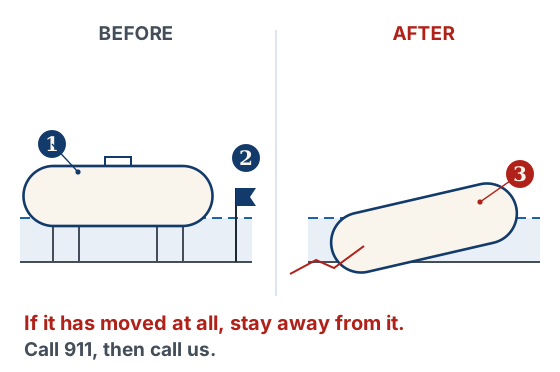
Weight is what keeps a tank where it belongs, and a full tank is a heavier tank.
- 1 Fill before the weather, not during it. Everybody calls at once when the ice arrives.
- 2 Mark the tank with a stake or a flag before a storm, so it can be found under snow or debris.
- 3 If it has shifted, floated, or moved at all — stay away. Do not push it back. The lines under it may be pulled or broken. Call 911, then call us.
High water
If the tank has shifted, floated, or moved at all, stay away from it. Do not push it back. Do not straighten it. Do not open or close anything on it. The lines under it may be pulled or broken.
Get clear, then call 911 and call us at (817) 444-4613. Moving a tank is our work and nobody else’s.
If water has been over the tank or the regulator, the system does not go back in service until a technician has been out. A regulator that has been underwater gets replaced, not dried off.
After the storm
Do not relight anything yourself. If the gas went off, if the tank moved, or if water got to the system, a technician has to leak-test the whole thing and relight the pilots. Same rule as any interruption of service, and it is the code.
If you smell gas at any point, stop reading and work the steps.
If you smell gas · Your tank and your bottles · Duty to warn · Propane, plainly
Where this comes from
Storm, outage, and flood steps on this page follow the propane industry’s consumer safety information from the Propane Education & Research Council (PERC) and the National Propane Gas Association.
Emergency numbers
Get on the list before it hits
Weather coming? Call (817) 444-4613 and get on the list before it hits. During office hours a person picks up.
This page is general safety information, not a substitute for a technician. If you think you have a leak, get out and call 911 first.