Emergency
If you smell gas
Get out.Touch nothing.Call from somewhere else.
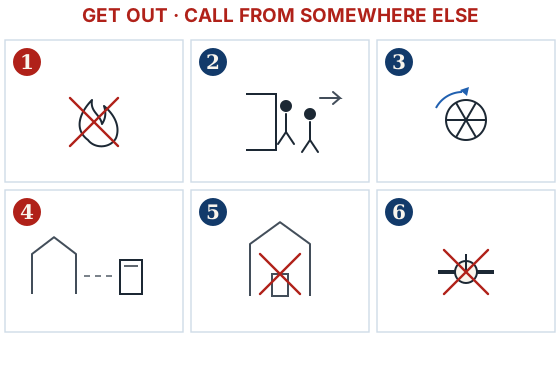
The same six steps, in the same order, as a picture. Print it and put it on the fridge.
- 1 No flames, no sparks. Nothing electric — not a switch, not a phone.
- 2 Get everyone out. Take the kids and the pets and go.
- 3 Shut off the tank valve — clockwise — only if you can reach it safely.
- 4 Call from somewhere else. 911 first, then us.
- 5 Do not go back inside until you are told it is clear.
- 6 Do not turn the gas back on yourself. The system has to be leak-tested first.
The six steps, in order
-
No flames, no sparks.
Put out cigarettes and any open flame. Do not touch a light switch, a thermostat, a garage door opener, an appliance, or your phone. Do not start a car parked at the building. A spark is all it takes.
-
Get everyone out.
Take the kids and the pets and go. Do not stop for belongings. If the smell is outside at the tank, get at least 50 feet away, uphill and upwind.
-
Shut off the tank valve — only if you can reach it safely.
The main valve is on top of the tank, under the lid. Turn the handwheel clockwise, to the right, until it stops. Skip this step if it means going inside, into a crawlspace, or anywhere near flames. The valve is not worth your life.
-
Call from somewhere else.
A neighbor’s house, or your car parked well away from the building. Call 911 first — they answer any hour. Then call us at (817) 444-4613.
-
Do not go back inside.
Wait until the fire department or a propane technician has checked the air and told you it is clear. The smell fading is not the same as the gas being gone.
-
Do not turn the gas back on yourself.
Before anything gets lit again, the whole system has to be leak-tested. That is required by code any time service is interrupted — not a fee we invented. It is our job, and we do it.
One more time, because it is the step people miss
Nothing electric in the area. Not a light switch, not a thermostat, not a phone, not an appliance, not the garage door. Get outside first, then use the phone.
Emergency numbers
What happens when you call us: we ask where you are, whether everyone is out of the building, and whether the tank valve is shut. Then we get a technician headed your way. We will not guess at a time on the phone, and you should not wait on us to leave the building.
Do not
- Touch light switches, thermostats, or appliance controls — a switch can spark.
- Use any phone, including a cell phone, inside or near the building.
- Light matches or use a lighter.
- Try to find the leak yourself.
- Try to repair an appliance, relight a pilot light, or restart your system on your own.
If you cannot smell it — odor fade
On rare occasions, propane can lose its added odor. This is called odor fade. Rust inside an old steel tank, fresh concrete, a cold or a stuffy nose, or a nose that has gotten used to the smell can all hide a leak. Trust the suspicion, not the nose. If an alarm sounds, or you hear hissing near the tank or a line, or a room just feels wrong, treat it as a leak and work the six steps.
A carbon monoxide alarm is not a gas alarm. They are two different devices for two different dangers. A propane gas detector mounts low, because propane vapor is heavier than air and settles near the floor. A CO alarm is a separate unit. A home with propane appliances should have both.
After a leak
A technician has to pressure-test the whole system before the gas goes back on, then relight the pilots and check every appliance. That is the code after any interruption of service. Plan on the visit taking a while, and do not light anything in the meantime.
Carbon monoxide is a different emergency · Your tank and your bottles · Storms and outages · Propane, plainly
Where this comes from
These steps follow the propane industry’s consumer safety guidance, published by the Propane Education & Research Council (PERC) and the National Propane Gas Association.
This page is general safety information, not a substitute for a technician. If you think you have a leak, get out and call 911 first.