Safety
Carbon monoxide
Carbon monoxide is a different emergency from a gas leak, and it needs a different reaction.
Gas you can smell. Carbon monoxide you cannot. It has no color and no odor at all. The only thing that catches it early is an alarm on the wall.
What CO is
Carbon monoxide, or CO, comes from any fuel that burns without enough air — propane, natural gas, oil, wood, charcoal, gasoline. The problem is incomplete burning, not any one fuel. A propane furnace or water heater that is installed right, vented right, and serviced once a year makes almost none of it.
It shows up when something is wrong: a blocked flue, a bird’s nest in a vent, a cracked heat exchanger in an old furnace, a house sealed up too tight for the appliance to breathe — or an outdoor appliance being run indoors.
Warning signs of incomplete combustion include soot or black marks around appliances and vents, an unusual or burning smell, a yellow or wavering burner flame that should be blue, and excess moisture on the inside of windows. If you see those, get everyone into fresh air and call us — do not keep running the appliance.
What it feels like
CO poisoning feels like the flu, without the fever.
- Headache
- Dizziness
- Nausea
- Weakness, or being unusually sleepy
- Shortness of breath, confusion, blurred vision
The tell is more than one person. If two people in the house feel sick at the same time, or the dog is sick too, and everyone feels better outside — think carbon monoxide. It is at its worst while people are asleep, because nobody notices.
If the alarm sounds, or anyone feels sick
- Get everyone out, including pets. Do not stop to check the alarm or open windows.
- Leave the door open on your way out. It helps air the house.
- Call 911 from outside or from a neighbor’s.
- Do not go back inside until the fire department says it is clear and they know where it came from.
- Then call us at (817) 444-4613, and have the appliance checked before it runs again.
Do not press the silence button and go back to bed. That is the mistake that kills people.
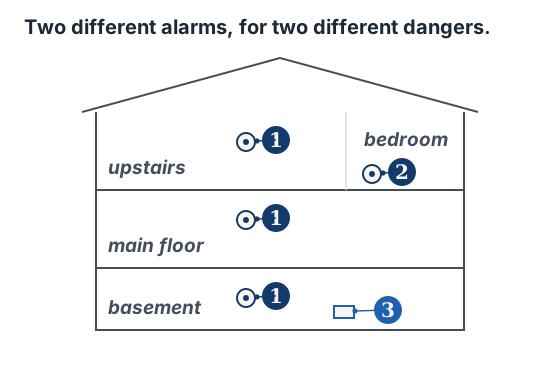
Two different alarms, for two different dangers. Mount a CO alarm at the height the manufacturer’s instructions say.
- 1 One CO alarm on every level of the house, including the basement.
- 2 One outside each sleeping area, close enough to wake you.
- 3 A propane detector is a different device. It mounts low, because propane vapour is heavier than air and settles toward the floor.
Alarms: where, how many, how long they last
- One CO alarm on every level of the house, including the basement.
- One outside each sleeping area, close enough to wake you.
- Mount it at the height the manufacturer’s instructions say. CO mixes through a room instead of settling, so follow the box, not a rule of thumb.
- Buy UL-listed units. Test them monthly. Battery backup matters, because CO events and power outages often show up on the same night.
- They wear out. Most are good for five to seven years. Check the date on the back and replace it when it expires or starts chirping its end-of-life beep.
- A CO alarm and a propane gas detector are two different devices. A propane home wants both.
Not sure which alarm you need, or where it goes? Ask us — call (817) 444-4613.
Keeping it from happening
Nothing that burns fuel runs indoors. No grill, no camp stove, no patio heater, no portable generator — not in the house, not in the garage with the door open, not on a porch next to a window. A garage is an enclosed space, and a grill in one can reach dangerous levels in minutes.
Keep the air moving where it should. Vents, flues, and chimneys need to be clear — of nests, leaves, ice, and anything stacked against them.
Have your propane appliances checked once a year, before heating season. A technician looks at the burners, the heat exchanger, the venting, and whether the appliance is getting enough air. A cracked heat exchanger gets replaced, never patched.
More on generators, ice, and blocked vents · If you smell gas · Your tank and your bottles · Duty to warn · Propane, plainly
Where this comes from
This guidance follows the propane industry’s consumer safety information from the Propane Education & Research Council (PERC) and the National Propane Gas Association.
Ask us
Not sure your system is breathing right? Call (817) 444-4613 and ask. During office hours a person picks up.
Emergency numbers
This page is general safety information, not a substitute for a technician. If you think you have a leak, get out and call 911 first.